Introduction
Java is one of the most densely populated islands in the world, yet it still offers vast natural landscapes of savannas, grasslands, and forests. One of the most remarkable is Baluran National Park, located in Situbondo, East Java. Known as “The Little Africa in Java”, Baluran presents visitors with sweeping savanna views, diverse ecosystems, and wild animals roaming freely, making it one of Indonesia’s most unique eco‑tourism destinations.
Beyond its nickname, Baluran is also a vital conservation area that protects endangered species and preserves one of the last remaining dry forest ecosystems in Java. The park’s combination of savanna, mangroves, evergreen forests, and coastal habitats makes it a living laboratory for biodiversity. For travelers, it offers not only adventure and wildlife encounters but also cultural and historical insights, making Baluran a complete destination for eco‑tourism in East Java.
Location & Accessibility
Baluran National Park is situated in Banyuputih District, Situbondo Regency, on the northern coast of East Java. The park lies along the Pantura Highway, the main road connecting Java and Bali, making it easy to reach. The entrance gate is located directly on the roadside.
To the north, the park borders the Madura Strait, where calm beaches are ideal for snorkeling and diving. At the center of the park stands Mount Baluran, an inactive volcano rising 1,247 meters above sea level, which gives the park its name.
Ecosystem & Wildlife
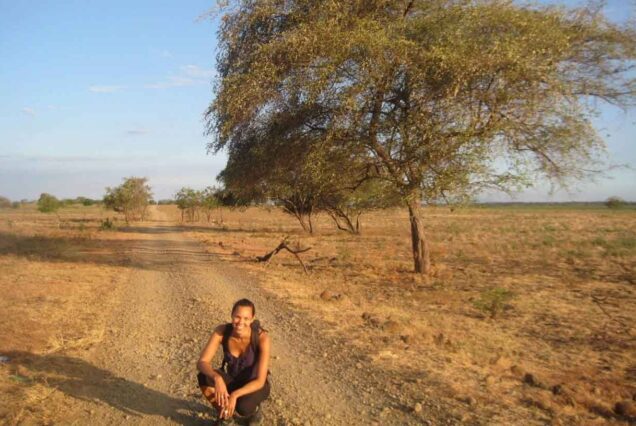
Baluran represents a dry forest ecosystem unique to Java. It includes savanna, mangrove forests, monsoon forests, coastal forests, swamp forests, and evergreen forests. Around 40% of the park is savanna, dominated by fertile volcanic and alluvial soils that support rich grasslands.
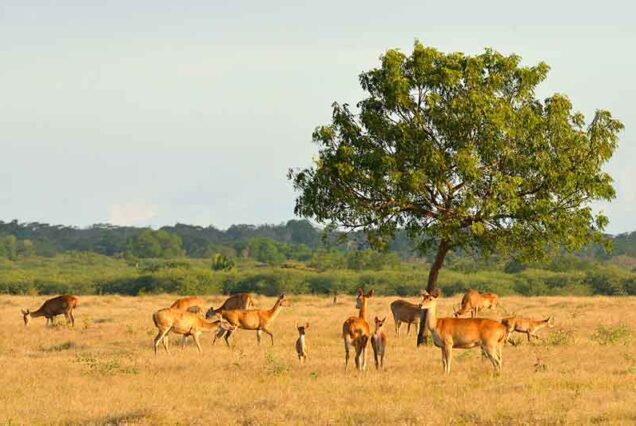
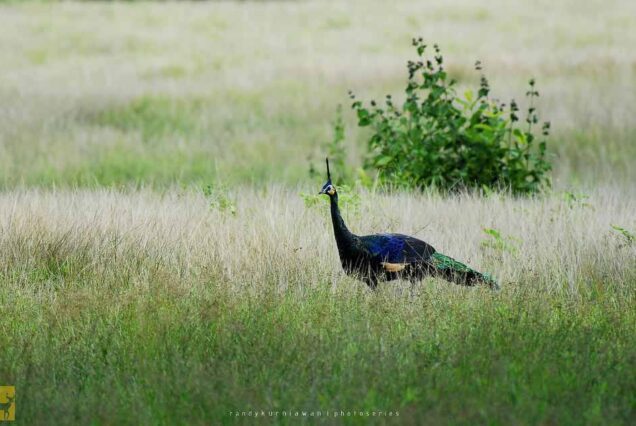
This environment provides food for grazing animals such as banteng (wild cattle), buffalo, deer, antelope, monkeys, and peacocks. Birdwatchers can spot more than 200 species. The best time to visit is the dry season (May–October), when animals gather at watering holes, making wildlife observation easier.
Main Attractions in Baluran National Park
Bama Beach
Bama Beach lies on the northern coast of the park. Its calm waters make it perfect for snorkeling, canoeing, and fishing. The surrounding mangrove forests are home to wild monkeys that forage along the shoreline. Visitors can enjoy simple facilities such as a canteen and small inns, allowing for overnight stays close to nature. The beach is also a great spot to watch sunrise or sunset over the Madura Strait.
Savanna Bekol
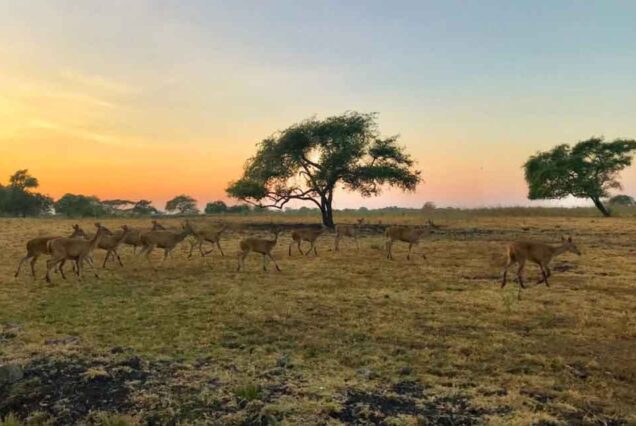
Bekol Savanna is the heart of Baluran and the reason it is called “The Little Africa in Java.” This vast grassland is home to herds of banteng, deer, and other wildlife. An observation tower allows visitors to watch animal activity from above, especially during the dry season when animals gather at watering holes. Bekol also has a rest house and an information center, making it a convenient base for exploring the park.
Curah Tangis
Curah Tangis is a cliff area popular with rock climbing enthusiasts. The cliffs rise about 30–40 meters, offering a challenging climb with rewarding views of the surrounding savanna and forest. It is one of Baluran’s adventure spots, appealing to visitors who enjoy outdoor sports and adrenaline activities.
Goa Jepang (Japanese Cave)
Goa Jepang is a historical cave located in Wonorejo Village. Built during the Japanese occupation in World War II, the cave is a reminder of Indonesia’s wartime history. Visitors can explore the cave and learn about its role as a military hideout, adding a cultural and historical dimension to their trip.
Evergreen Forest
The Evergreen Forest of Baluran remains lush and green throughout the year. Trekking paths allow visitors to explore the forest and observe wildlife in their natural habitat. This area contrasts with the dry savanna, showing the park’s ecological diversity. It is ideal for nature walks, photography, and bird watching.
Sumur Tua (Ancient Well)
Sumur Tua, or “Old Well,” is believed to be a relic from the Majapahit Kingdom. This historical site adds cultural depth to Baluran, connecting visitors to Java’s ancient heritage. The well is a reminder of how communities once relied on natural water sources in this dry region.
Mount Baluran
Mount Baluran is the dormant volcano that dominates the center of the park. Standing at 1,247 meters above sea level, it provides a scenic backdrop to the savanna. While not commonly climbed, the mountain is a striking landmark visible from many parts of the park, symbolizing the natural strength of East Java.
Bilik Beach and Sijile Beach
These are alternative beaches to Bama, offering quieter atmospheres and natural beauty. Although facilities are limited and overnight stays are not yet available, the beaches are perfect for visitors seeking solitude and pristine coastal scenery. They highlight Baluran’s diverse landscapes, from savanna to forest to coastline.
Top Activities in Baluran National Park
Wildlife Safari at Bekol Savanna
The highlight of Baluran is the Bekol Savanna, often called The Little Africa in Java. Visitors can enjoy a safari‑like experience, spotting banteng (wild cattle), deer, monkeys, peacocks, and even wild buffalo. An observation tower allows you to watch animal activity from above, especially during the dry season when animals gather at watering holes.
Bird Watching
Baluran is home to over 200 bird species, making it a paradise for birdwatchers. Early mornings are the best time to see peacocks, hornbills, storks, and kingfishers. Designated bird watching areas provide excellent opportunities for photography and observation.
Snorkeling and Canoeing at Bama Beach
On the northern coast, Bama Beach offers calm waters perfect for snorkeling, canoeing, and fishing. The coral reefs host colorful marine life, while mangrove forests nearby are home to monkeys and coastal birds. Visitors can also enjoy sunrise and sunset views over the Madura Strait.
Trekking in the Evergreen Forest
The Evergreen Forest remains lush throughout the year, contrasting with the dry savanna. Trekking paths allow you to explore the forest, observe wildlife in their natural habitat, and experience the park’s ecological diversity.
Rock Climbing at Curah Tangis
For adventure seekers, Curah Tangis offers cliffs 30–40 meters high, ideal for rock climbing. The area provides both challenge and scenic views, making it a favorite for outdoor sports enthusiasts.
Cultural Exploration at Goa Jepang
Goa Jepang (Japanese Cave) is a historical site from World War II, located in Wonorejo Village. Exploring the cave gives visitors insight into Indonesia’s wartime history and adds cultural depth to the natural adventure.
Relaxation at Alternative Beaches
Besides Bama, Bilik Beach and Sijile Beach offer quieter coastal experiences. Though facilities are limited, these beaches are perfect for solitude, photography, and enjoying pristine natural scenery.
Historical Visit to Sumur Tua
Sumur Tua (Ancient Well) is believed to be a relic from the Majapahit Kingdom. This site connects visitors to Java’s ancient heritage and highlights the cultural significance of Baluran beyond its natural beauty.
Why Visit Baluran National Park?
- Nicknamed “The Little Africa in Java” for its safari‑like savannas.
- Home to diverse ecosystems and wildlife.
- Easy access via the Pantura Highway.
- Unique combination of savanna, forest, and coastal attractions.
- Opportunities for snorkeling, bird watching, trekking, rock climbing, and cultural exploration.